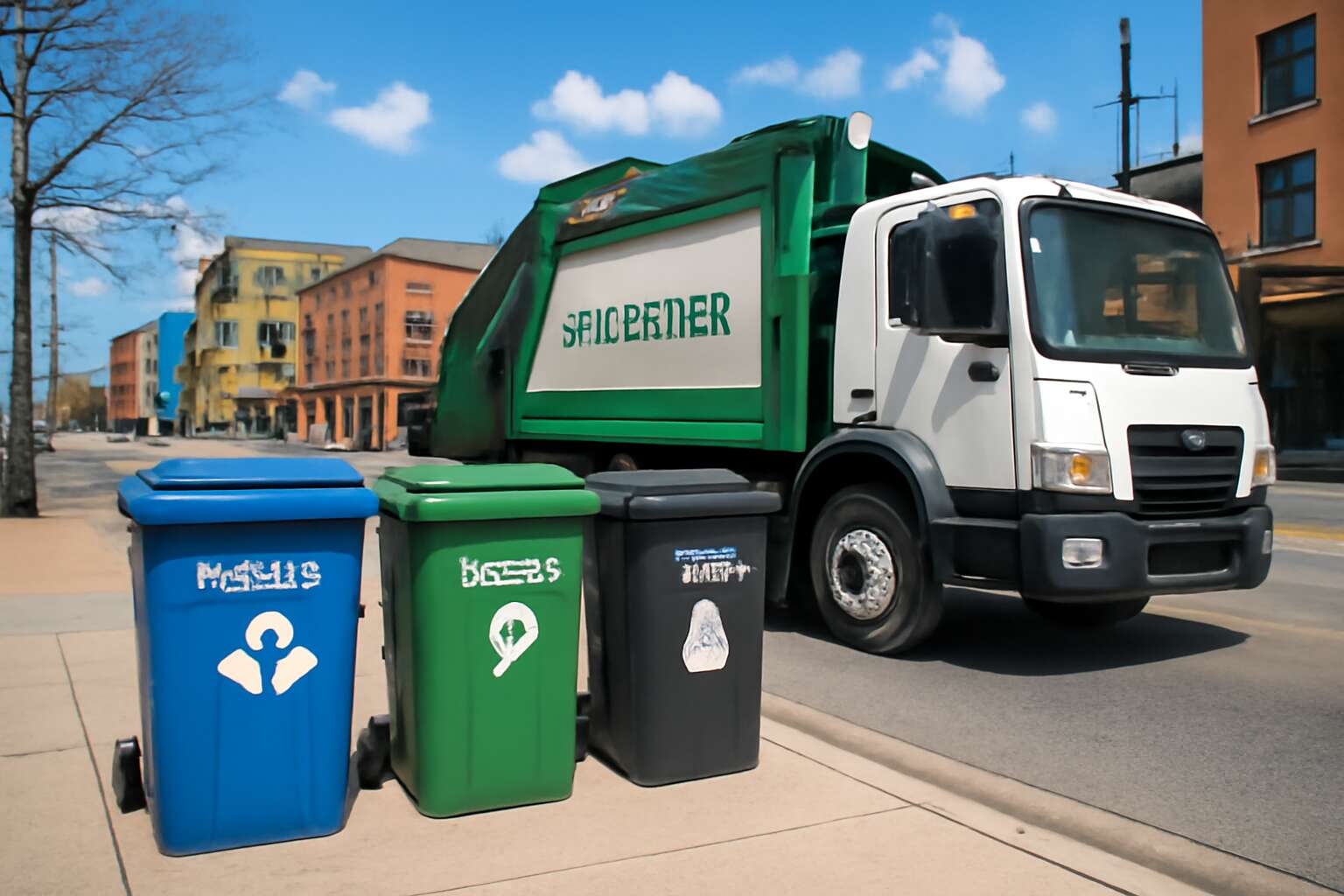
Waste management in Kitchener: overview
Overview of waste management programs in Kitchener
Every discarded bottle holds a future, and in Kitchener that future is rewritten daily. Across modern urban programs, more waste is diverted from landfills, signaling a shift toward smarter collection and recycling. waste management kitchener stands as a beacon of city-led stewardship, turning waste into resource!
Key services include:
- Curbside recycling separating paper, plastic, metal, and glass
- Organics and composting to nourish soil
- Electronics and bulky waste drop-offs for responsible disposal
For readers in South Africa, the idea of source separation resonates with everyday calls for cleaner streets and accountability. In Kitchener, curbside routines and education weave a gentler, more resilient urban fabric.
Understanding waste management kitchener services and programs
In Kitchener, waste management kitchener is less about disposal and more about conversation—how a city transforms leftovers into opportunity. I’ve watched neighbors turn kitchen scraps into curiosity and small, practical gains. The narrative shifts when accountability meets everyday choices.
South African readers may recognize a familiar cadence: source separation, communal accountability, and curbside education shaping daily life. Here, municipal programs shepherd that rhythm, turning bottles, peels, and obsolete electronics into usable resources and soil nourishment!
Key services include:
- A reimagined curbside stream that sorts by materials, guiding residents to keep paper, plastics, metals, and glass clean and separated.
- Organics as a vital ingredient in compost and soil restoration, closing the loop from kitchen to garden.
- Safe disposal routes for electronics and bulky items through community drop-offs that emphasize responsibility and recycling.
Importance of recycling and organics in Kitchener
The night shifts breathe through Kitchener’s streets, where bins become oracles and every scrap murmurs a rebirth. “Waste is a resource in disguise,” a quiet line that lingers at the curb. waste management kitchener is conversation, not ritual—turning leftovers into opportunity, letting organics nourish soil and plastics find second lives.
The rhythm is practical and ceremonial all at once:
- clean, separated recyclables
- organics returning to soil
- responsible drop-offs for bulky goods
These pillars keep the city breathing and give SA readers a shared cadence in the tale of waste.
In a world of rising urban edges, the Kitchener model—where accountability and daily choices meet—speaks across continents. waste management kitchener echoes in South Africa as a quiet, persistent vow toward stewardship.
How residents and businesses can contribute to local waste goals
“Waste is a resource in disguise,” and in Kitchener that line isn’t poetry—it’s policy. Global recycling rates have risen roughly 25% over the last decade, proof that leftovers can become livelihoods, not landfill furniture. waste management kitchener translates that spark into streetwise pragmatism, a city-wide ethos where bins serve as compasses and curiosity becomes curbside policy.
Residents and businesses contribute by infusing daily choices with accountability, turning consumption into a quiet pact with the curb. Think sensible labeling, data-driven audits of what sneaks into the wrong bin, and partnerships that treat the waste stream as a living system rather than a nuisance. The result is cleaner streets, steadier budgets, and a city that nudges the future toward stewardship with a wink and a shrug. For SA readers, that ethos translates across continents.
Waste collection and recycling in Kitchener
Residential curbside recycling guidelines in Kitchener
A well-sorted bin is a quiet revolution—Kitchener’s curbside system runs smoother when households treat recyclables as allies! I’ve learned that the daily ritual of separating paper, plastics, and metals becomes a practical ethic that reduces trash and reveals the city’s rhythms in real time.
Waste collection and recycling in Kitchener operates on clarity and care. The idea behind waste management kitchener is simple: sort well, rinse when in doubt, and keep contamination low.
- Materials accepted at curbside
- Items requiring drop-off or special handling
- Common contamination examples to avoid
That transparency travels well to South Africa, where shared municipal habits determine how smoothly a city cycles through its waste.
Blue bin and green bin separation and tips
In the realm of waste management kitchener, the curbside exchange is a quiet revolution—participation rates climbed into double digits last year, turning sorting from a chore into neighborhood theater. The blue bin and green bin are the two protagonists, guiding residents with a wink and a whistle.
Blue bin channels recyclables: paper, cardboard, cans, bottles, and plastics; green bin captures organics: food scraps and yard waste. Separating these streams lowers contamination and speeds processing, letting the system breathe a little easier while you sleep.
From a South African observer, the lesson is universal: clear streams beat chaotic trash.
- Blue bin: paper, cardboard, cans, bottles, and plastics
- Green bin: food scraps and yard waste
- Contaminants in the wrong bin slow the system
Leaf and yard waste collection schedules and best practices
Kitchener’s waste collection is a quiet revolution; last year, curbside participation climbed into double digits, turning sorting into neighborhood theater. In waste management kitchener, leaf and yard waste follow a seasonal rhythm separate from the blue and green bins, keeping piles manageable as night falls!
Leaf and yard waste collection follows a distinct seasonal calendar, synced to weather and growth cycles. This stream accepts fallen leaves, grass clippings, and small branches, while recyclables stay in the blue and green streams. Contaminants slow the process, so separation stays crucial for a smooth cycle.
- Seasonal collection windows align with city schedules
- Only yard waste belongs in this stream
- Avoid mixing with recyclables to protect processing
For South Africa readers, the universal lesson is clear: clear streams beat chaotic trash, a haunting reminder that waste management kitchener habits translate across borders and into cleaner streets at home.
Organic waste program and composting options in Kitchener
In Kitchener, waste streams move with the quiet grace of a living forest; last year, 68% of households aligned with the organics program, turning kitchen scraps into something useful. The city reframes trash as a resource, inviting neighbors to view compost as a second sunrise. The organic stream stays separate from blue and green bins, feeding a patient, seasonal cycle.
Organic waste programs collect cooking scraps and yard trimmings, steering waste away from landfills toward transformation.
- Municipal organics pickup and drop-off facilities
- Backyard composting and vermicomposting options
For South Africa readers, the core idea travels well: streams kept clean empower communities. Across oceans, the lesson remains: clear streams beat chaotic trash, and waste management kitchener offers a blueprint.
Industrial and commercial waste management in Kitchener
Waste reduction strategies for local businesses
In Kitchener’s industrial districts, waste management kitchener is reframing what counts as capital. A local operator once quipped, “Waste is a design flaw,” and the insight has warmed into every loading dock and boardroom. The tempo now favors streamlined, auditable streams—nondesignated trash becomes revenue through smarter separation and contracts that reward reuse rather than disposal.
Industrial and commercial waste management kitchener embraces a holistic approach: separating streams at source, partnering with compliant recyclers, and prioritizing materials that can circle back into production. For businesses facing rising disposal costs in South Africa and beyond, the lesson remains: design choices today shape tomorrow’s waste footprint and cost trajectory, turning waste into a resource.
Key principles for local businesses include:
- Align purchasing with recyclable and reusable materials
- Invest in data-driven tracking to understand waste streams
- Seek supplier programs that offer packaging take-backs or closed-loop options
Comprehensive recycling programs for offices and retail
At a busy Kitchener loading dock, a quiet truth travels fast: “Waste is a design flaw.” In waste management kitchener, that idea has become a daily discipline, turning clutter into clarity and cost into opportunity for offices and retailers alike.
Industrial and commercial waste management in Kitchener now centers on comprehensive recycling programs for offices and retail, with streams separated at source, partners that are fully compliant, and contracts that reward reuse rather than disposal.
In practical terms, it means design choices that keep materials circulating—demanding durable packaging, digital tracking, and transparent reporting.
- Choose packaging that travels back into production and is easy to separate
- Deploy data dashboards to understand waste streams in real time
- Partner with recyclers who provide verifiable compliance and closed-loop options
For South African readers facing rising disposal costs, Kitchener-style thinking offers a bridge—treating waste as a resource and a metric of responsible growth.
Hazardous waste handling and disposal for businesses
Industrial waste isn’t a burden—it’s a design choice. In Kitchener, 80% of hazardous waste streams improve when segregation happens at source. For businesses, that means partnering with licensed haulers, strict manifests, and a clear disposal path that keeps staff safe and audits clean. waste management kitchener turns compliance into a tool for cost control and operational clarity.
Practical steps keep risk low and compliance clear.
- Segregate hazardous from non-hazardous at source
- Use licensed, trackable haulers and signed manifests
- Store waste in labelled, leak-proof, compatible containers
- Maintain spill kits, training, and incident response plans
For South African readers facing rising disposal costs, this Kitchener ethos translates into real savings: compliant handling, faster audits, and predictable budgets. This model demonstrates how safety, efficiency, and value can travel across oceans.
Waste audits and program optimization for organizations
Bold efficiencies rise when waste streams are examined with an auditor’s eye. In Kitchener, industrial facilities that run rigorous waste audits cut disposal bills by as much as a quarter—proof that waste management is a strategic lever, not a burden. For South African businesses chasing global standards, the lesson travels across oceans: clarity, compliance, and predictable budgets. This is the core of waste management kitchener.
Audits and program optimization turn data into guidance. By mapping material flows, establishing governance, and tracking performance, organizations build a resilient system that remains clear through audits and market shifts.
- Data-driven audits
- Governance and oversight
- Clear metrics
The result is a culture that treats waste as a resource—safety, efficiency, and value rise with every audit.
Partnering with local waste management providers in Kitchener
Factories and warehouses in Kitchener treat waste as a budget lever. In waste management kitchener circles, rigorous waste audits can trim disposal bills by up to 25%—proof that discipline pays off and that waste can be a strategic asset rather than a cost center. For South African readers chasing global standards, the lesson travels across oceans with clarity and budget predictability.
Partnering with local waste management providers in Kitchener brings on-the-ground expertise and dependable service. A collaborative model keeps material streams aligned with local regulations and makes invoicing transparent. Consider these benefits:
- Tailored service models fit your site size and schedule
- Real-time reporting and clear, predictable billing
- Thoughtful waste sorting and consolidation to minimize transport and disposal
Together, these elements turn waste handling into a controlled, value-driven operation—stitching safety, efficiency, and value into the fabric of daily business.
Sustainability initiatives and community engagement in Kitchener
Community education programs on waste reduction
Waste isn’t waste until we decide otherwise, and in waste management kitchener a quiet revolution is underway—one that fuses sustainability with everyday life. A handful of local voices remind us that reduction is a habit, not a banner. “Our choices tonight echo tomorrow,” a community mentor often says, and the line sticks as we reimagine streets, schools, and shared spaces as classrooms for change.
Sustainability initiatives in Kitchener lean into collaboration. From schoolyard compost pilots to neighborhood repair cafés, participants turn scraps into soil and stories into momentum. To keep engagement tangible, organizers offer:
- student ambassador programs
- multilingual outreach materials
- hands-on workshops in libraries and community centres
Everyone—residents, businesses, and visitors—becomes a steward in this shared project. By weaving education into daily routines, waste management kitchener grows from a municipal program into a livable philosophy, one that South African readers can recognize in their own towns and adapt with resilience and imagination.
Zero waste initiatives and community challenges in Kitchener
‘Our choices tonight echo tomorrow,’ a community mentor often says, and in Kitchener that motto is more than poetry—it’s a blueprint. Waste becomes resource when streets, schools, and parks become classrooms for change.
Sustainability initiatives in Kitchener hinge on collaboration that crosses boundaries. Pop-up composting in parks and neighborhood storytelling nights turn everyday moments into momentum.
Yet challenges persist: limited funding, data sharing gaps, and the ever-present lure of convenience. Organizers meet these by quick, tangible events and by inviting businesses to view waste as an opportunity rather than a nuisance. This practical energy is part of waste management kitchener, a living experiment that asks everyone to prove the habit of care.
For South African towns facing similar pressures, Kitchener’s approach shows how education, culture, and commerce can mingle in a livable philosophy—without losing the wit that keeps the conversation human.
School and workplace outreach and involvement
More than half of Kitchener’s schools have woven waste literacy into the daily rhythm, turning corridors into discussion forums and cafeterias into experiments in resourcefulness. In this climate, classrooms borrow the language of compost and circular economy, while staff rooms become sprint lanes for practical ideas. This is the heartbeat of waste management kitchener, a living ethos where every handprint counts, and where workplaces mirror classrooms in their appetite for change!
- Student-led workshops that translate theory into hands-on projects
- Workplace green teams coordinating challenges, signage, and on-site composting
- Ambassador programs that connect schools with community volunteers
Cross-pertilization between schools and workplaces flourishes when local partners—parents, small businesses, and municipal programs—are invited to participate. For South African towns facing similar pressures, Kitchener’s blend of education, culture, and commerce offers a livable philosophy, balancing practicality with wit and humanity.
Resources and tools for residents to reduce waste
From the shadowed corners of Kitchener, I watch sustainability initiatives rise like quiet gargoyles, guarding streets and schools alike. Waste management kitchener is not a sterile policy but a living pact—neighbors, libraries, and local businesses decoding waste into resource and turning abandoned corridors into collaborative laboratories of change.
- Community swap days and reuse centers
- Public library guides and digital toolkits
- Volunteer ambassador programs and school partnerships
- Neighbourhood repair cafes and upcycling murals
Across neighborhoods, tools—circular-economy curricula, open-houses, citizen-led audits—bind people with purpose and spark quiet pride. In a South African urban mood, these threads feel familiar: data meeting dialogue, and every doorstep becoming a doorway to a cleaner, more mindful future.
Regulations, permits, and future outlook for waste management in Kitchener
Regulatory framework in Waterloo Region and Ontario
In Kitchener, the morning chorus includes more than car horns and coffee mugs—it’s the sound of bylaws marching to the curb. waste management kitchener runs on a regulatory beat that keeps recycling on track and landfills from becoming urban art. A savvy regulator quips that ‘Regulation is the price of cleanliness’—and the motto sticks.
- Facility approvals and permits
- Hauler licensing and performance reporting
- Waste stream compliance and environmental reporting
Regulatory framework in Waterloo Region and Ontario translates into permits, licensing, and audits. Operators secure approvals for transfer stations, recycling facilities, and hazardous waste handling, while reporting to keep the system transparent and accountable.
Looking ahead, the future outlook for waste management kitchener leans on digital tracking, data sharing, and stronger producer responsibility. Expect tighter alignment between municipal programs and provincial incentives, nudging residents and businesses toward a true circular economy.
Permits and compliance for businesses and facilities
Regulation keeps Kitchener’s streets clean and its recycling true. A savvy regulator quips, “Regulation is the price of cleanliness”—and the motto sticks. waste management kitchener moves on that cadence, turning facility approvals, licensing, and environmental audits into a steady drumbeat that keeps landfills from turning the city into sculpture!
- Approvals for transfer stations and recycling facilities, ensuring safe siting, capacity, and environmental safeguards.
- Licensing of waste haulers and ongoing performance reporting to maintain accountability and service quality.
- Compliance across waste streams with mandatory environmental reporting and traceability requirements.
Looking forward, the future outlook for waste management kitchener leans into digital tracking, data sharing, and stronger producer responsibility. Expect tighter alignment between municipal programs and provincial incentives, nudging residents and businesses toward a true circular economy. In practice, waste management kitchener demonstrates how culture and compliance can co-create value.
Targets and milestones for waste reduction in Kitchener
Regulatory rhythm is the unglamorous hero of waste management kitchener. Regulations are the metronome that makes facility approvals, licensing, and environmental audits feel like a well-rehearsed performance. Approvals for transfer stations and recycling facilities ensure safe siting, capacity, and environmental safeguards, while licensing waste haulers and ongoing performance reporting maintain accountability and service quality. Compliance across waste streams with mandatory environmental reporting and traceability requirements binds the system together.
- Approvals for transfer stations and recycling facilities, ensuring safe siting, capacity, and environmental safeguards.
- Licensing of waste haulers and ongoing performance reporting to maintain accountability and service quality.
- Compliance across waste streams with mandatory environmental reporting and traceability requirements.
Looking forward, the future outlook leans into digital tracking, data sharing, and stronger producer responsibility. Expect tighter alignment between municipal programs and provincial incentives, nudging residents and businesses toward a true circular economy. In practice, culture and compliance co-create value, turning waste into a resource rather than a cost of doing business.
Targets and milestones for waste reduction in Kitchener outline a pragmatic arc.
- Short-term: raise diversion through targeted recycling and organics.
- Mid-term: expand digital tracking and producer responsibility programs.
- Long-term: sustain reductions with audits and cross-sector coordination.
Staying informed about changes in waste management in Kitchener
Regulatory rhythm is the quiet engine of waste systems, turning compliance into clarity. “Regulations are not the finish line; they’re the guardrails,” a regional official notes, and that discipline keeps everyone aligned. In waste management kitchener, these rules set the tempo for approvals, siting, and environmental audits that protect people and the environment.
Approvals for transfer stations and recycling facilities ensure safe siting, capacity, and environmental safeguards. Licensing waste haulers and ongoing performance reporting maintain accountability and service quality. Compliance across waste streams with mandatory environmental reporting binds the system together.
Looking forward, digital tracking, data sharing, and stronger producer responsibility reshape the landscape. Expect closer alignment between municipal programs and provincial incentives as residents and businesses move toward a true circular economy.
- Digital tracking and data sharing
- Stronger producer responsibility
- Provincial-aligned incentives
Culture and compliance co-create value, turning waste into a resource rather than a cost.


0 Comments