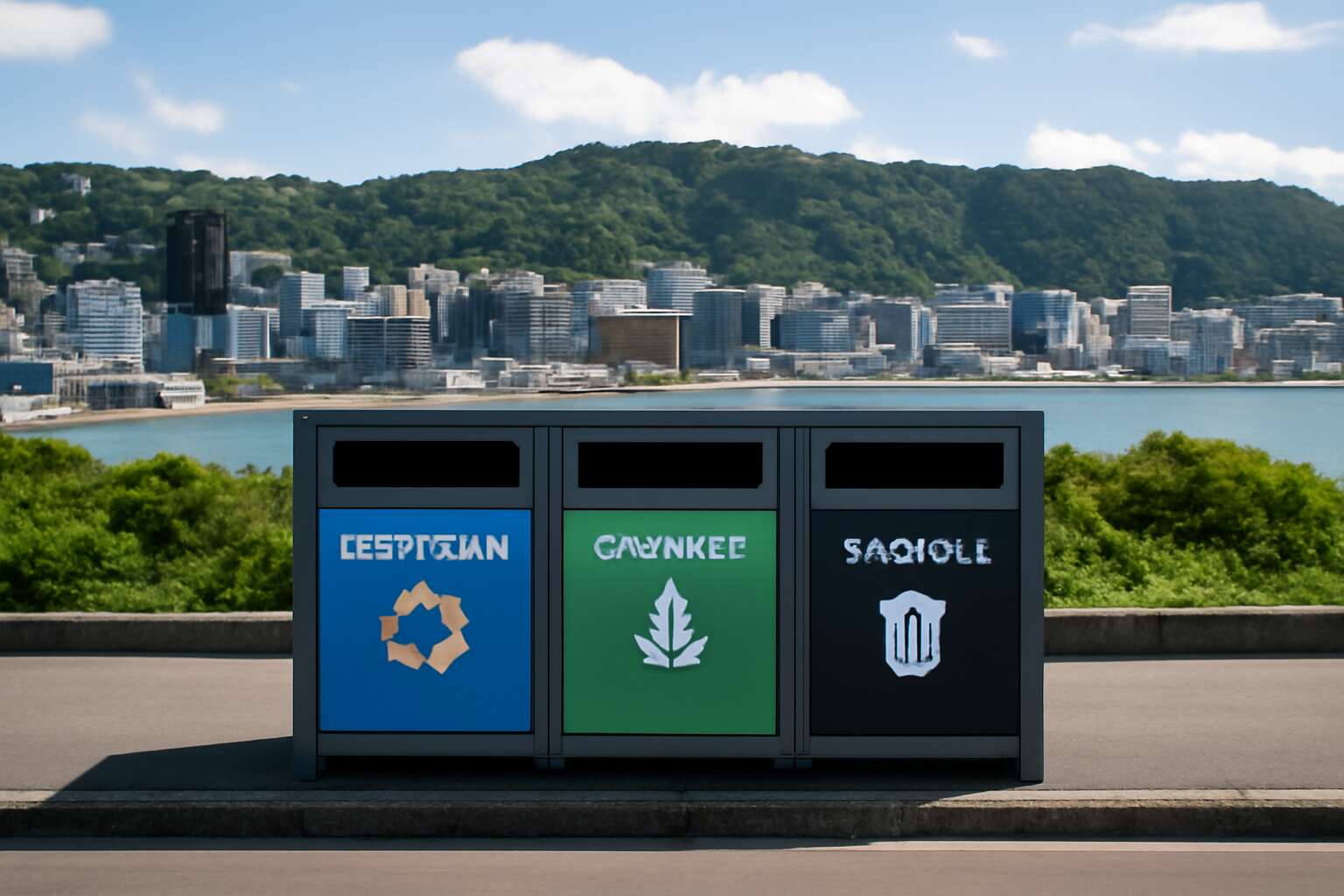
Wellington local waste management landscape
Overview of local waste governance
Wellington’s waste streams move with a quiet, pragmatic tempo, a city learning to live with its leftovers. Recent figures place the waste diversion around 40%, a statistic that both challenges and inspires the people who design the systems. Local waste governance sits at the crossroad of council policy, regional strategy, and community stewardship, knitting households into a shared future. This is waste management wellington in practice: a living ecology of rules, incentives, and everyday decisions that shape what ends up where.
- Council-led kerbside collections and recycling education
- Regional partnerships coordinating transfer stations and landfills
- Growing organics programs and waste-minimisation initiatives
Beyond the bins, the governance landscape prizes transparency, measurable outcomes, and public engagement. I see councils, residents, and nonprofits negotiating timelines, pilots, and budgets—each decision echoing a commitment to reduce waste and extend resources!
Current waste statistics in Wellington
Forty percent—an arresting tempo that marks Wellington’s turning point—haunts the curb and council chambers alike. In waste management wellington, current statistics reveal a nuanced arc: diversion nudges upward as organic programs bloom and recycling widens its embrace to more households. The city breathes in reform, exhaling it as lower landfill volumes.
Key highlights from the latest figures include:
- Organics collection expanding to more suburbs, lifting composting rates
- Household recycling participation rising, with sharper gains for paper and plastics
- Transfer stations refining sorting to cut landfill waste
South African readers may recognize the rhythm—policy, participation, and time—yet Wellington writes its own lyric of resourcefulness: every sorted bag, every compostable cap, becomes a note in a longer chorus toward a lighter footprint. The statistics are not mere numbers but quiet commitments stitched into daily life.
Key players in the waste sector
40% of Wellington’s waste is diverted from landfill, and the curve keeps bending—an emblem of waste management wellington, a witty tug-of-war between curbside bins and council bylaws. The city’s waste landscape hums with a new normal: more households sorting, more organics going to compost, and fewer bags marching to the landfill.
Key players in the waste sector keep the rhythm:
- Wellington City Council waste services
- Private waste contractors and collectors
- Local transfer stations and sorting facilities
- Organics processors and composting operations
- Community groups and industry partners
From policy debates to on-the-ground practice, everyone has a seat at the table; this isn’t sci-fi—it’s everyday logistics, data streams, and public trust.
Regulatory framework and compliance
The regulatory spine of Wellington’s waste system keeps the city upright: waste management wellington hinges on clear bylaws paired with national standards. The Wellington City Council spells out service rules, collection schedules, and licensing, while the Ministry for the Environment guards the overarching framework on waste minimisation and hazardous waste. Compliance isn’t abstract—it’s about permits for transfer stations, accurate reporting, and everyday discipline from households and waste contractors. In this city, the curve toward higher diversion depends on clear rules, transparent data, and steady enforcement that earns public trust. For South African practitioners, Wellington’s regulatory balance between enforcement and service clarity offers a useful lens!
Key regulatory touchpoints include:
- Local waste carrier licensing and vehicle standards
- Transfer station consents, audits, and operator reporting
- Hazardous waste handling, segregation, and storage rules
- Waste data submission and performance reporting to council
- Public education requirements and household sorting compliance
Residential waste strategies in Wellington
Household recycling programs and facilities
In Wellington, everyday choices reshape the waste stream. “Every forkful has a second life,” a resident told me, and waste management wellington proves it with smart sorting at the curb.
Residential strategies start at home: curbside recycling, composting organics, and mindful purchasing.
- Household recycling programs tied to council guidelines
- Organic waste collection and at-home composting
- Drop-off centres for e-waste, batteries, and hazardous items
These programs feed into city facilities, fueling waste management wellington with efficiency. The model travels well beyond Wellington and resonates with South African households seeking practical waste discipline.
Organic waste and composting initiatives
Wellington households are quietly rewriting the waste ledger, proving that small habits add up to big outcomes. A sizeable slice of the bin—nearly a third—could become soil, mulch, or energy with the right curbside routines. A neighbourly quip: “Our scraps fertilise tomorrow,” a local caretaker reveals.
Organic waste collection is paired with approachable at-home composting, turning kitchen cast-offs into real soil magic. From compost bins to bokashi setups, residents feed gardens, shrink landfill mass, and demonstrate how waste management wellington can prosper through simple, steady choices.
To keep the flow practical, here are accessible moves:
- Separate kitchen scraps into a dedicated organics bin
- Embrace home composting or bokashi fermentation
- Join a community composting or soil-sharing initiative
These organic loops nourish city facilities with efficiency, stamping Wellington as a beacon for disciplined waste stewardship in a world thirsty for smarter waste practices.
Waste collection schedules and tips for residents
Disorder in the bin isn’t merely clutter; it’s an opportunity waiting to be harvested. In Wellington, nearly a third of what lands in the general waste bin could be diverted through disciplined scheduling and careful separation. Turn routine into ritual: fixed pick-up times, consistent sorting, and a simple reminder system that travels with you. This is waste management wellington in action—practical, neighbourly, and quietly transformative.
Residential strategies hinge on understanding the schedule and keeping a tidy, secure setup. Neighbourhoods converge on the idea that predictable collection windows reduce cross-contamination and ease the pressure on city facilities. By treating the curb as a shared space, residents contribute to a cleaner, more efficient system.
These habits reinforce waste management wellington as a model of disciplined city living, a quiet revolution happening one household at a time.
Commercial and industrial waste solutions in Wellington
Business waste management services
Across Wellington, commercial waste can drain profits if left unmanaged. A smart approach leans on data-driven audits, on-site segregation, and clear regulatory pathways. waste management wellington provides a practical framework that turns waste into opportunity, helping businesses reduce disposal costs while improving recycling rates. The result is cleaner sites, happier auditors, and a more efficient operation that works with the city and with readers across South Africa.
- On-site waste audits and diversion planning
- Tailored waste streams including confidential and e-waste handling
- Safe management of hazardous and regulated waste with compliant transport
Businesses gain ongoing reporting, waste metrics, and scalable options as they grow. The service integrates with existing facilities teams, delivering predictable costs and fewer surprises at month-end. In short, Wellington’s commercial and industrial waste solutions keep operations lean while meeting all local standards.
Waste segregation and recycling in workplaces
In Wellington’s dim-lit warehouses, nearly half of commercial waste slips through sorting—an unseen tax on margins and morale. Waste management wellington offers a framework that converts waste into opportunity, turning data into disciplined action. Audits, on-site segregation, and compliant transport map a quiet rebellion against waste.
On-site waste audits and diversion planning reveal where the real value hides. Tailored streams make room for confidential paper, electronics, and hazardous waste handled with care.
- Confidential paper and data streams
- E-waste and electronics recovery
- Hazardous and regulated waste with compliant transport
These streams align with lean facilities management, delivering predictable costs and fewer surprises at month-end.
The approach weaves waste metrics into daily operations, offering ongoing reporting and scalable options as businesses grow. For readers in South Africa, Wellington’s method feels familiar—an elegant, shadowed balance of efficiency and responsibility, a distant echo of waste management wellington.
Hazardous waste handling and compliance for businesses
Wellington’s corridors hum with efficiency, yet a quiet leak persists—40% of hazardous waste slips through routine handling. That becomes opportunity in waste management wellington, where compliant practices are a disciplined advantage — a model South African readers recognise as lean practice.
From on-site audits to vigilant transport compliance, the model maps waste as data, turning risk into predictable costs and cleaner margins. The approach embraces a few core streams without drama:
- Regulated transport and traceability for hazardous materials
- On-site minimisation, sorting, and controlled separation
- Documentation, reporting, and ongoing compliance checks
In this narrative, Wellington’s commercial systems fuse efficiency with responsibility, turning waste into a hidden asset. For South African firms juggling cross-border supply chains, the method feels familiar yet refreshingly novel.
Waste reduction and supplier collaboration programs
Factories and offices in Wellington dream a little greener: a pulse study hints that 30% of commercial waste could be redirected through smarter supplier collaboration. In this vision, waste management wellington becomes not a nuisance but a currency—an efficiency that travels across borders, even to South African partners navigating complex supply chains.
- Shared waste reduction targets linked to procurement and packaging design
- Transparent material flows and end-of-life recovery commitments
- Data-driven dashboards that reveal waste streams and performance gaps
Commercial and industrial waste solutions in Wellington harmonize efficiency with responsibility, turning surplus packaging and obsolete equipment into conversations with suppliers that keep margins clean and minds clear. The result is a marketplace where waste is a signal, not a setback—a quiet alchemy at work.
Waste reduction and recycling initiatives in Wellington
Community education and outreach campaigns
Wellington is turning waste into a living, magical narrative; communities choreograph daily choices that ripple through the city! A glimpse into waste management wellington shows how inventive outreach makes recycling a shared adventure, not a chore. From pop-up demos to radio stories, campaigns spark curiosity and action.
Community education and outreach campaigns shape a culture of mindful consumption, translating policy into practical steps and turning sorting, reducing, and reusing into daily habits:
- School workshops that empower young recyclers
- Neighbourhood swap events and repair cafes
- Public art projects built from reclaimed materials
These efforts weave trust and continuity, reminding us that each item redirected from a landfill is a small triumph in the bigger story of waste management. Here, outreach becomes a catalyst for sustainable habits that travel beyond the curb and echo across South Africa.
Circular economy opportunities and case studies
Wellington is learning to flirt with the circular economy, and the dividends are piling up faster than compostable coffee cups at the market. A bold stat floats around: up to 40% of landfill waste could be reimagined through smarter design and reuse. In this city, waste management wellington is less about bins and more about business models that keep materials buzzing in circulation.
- Industrial symbiosis hubs turning waste heat into value
- Material passports tracking resources across projects
- Repair and upcycling networks linking designers, makers, and residents
Case studies show momentum: a reclaimed timber cooperative, a plastics-to-tiles pilot, and a city-backed repair lab that extends product lifespans. The narrative proves circularity in Wellington can be playful, profitable, and stubbornly hopeful.
Zero waste events and programs
Wellington is rewriting its waste story with design-led reuse and stubborn optimism! Zero-waste events are multiplying across neighborhoods, and tonnes once destined for landfill are being diverted through clever swaps and community effort. We see it in action.
These initiatives rely on practical networks rather than bans, turning waste into value.
- Repair and upcycling networks linking designers, makers, and residents
- Community compost hubs and organics recovery programs
- Business waste reduction collaborations with local suppliers
For readers in South Africa, Wellington’s path offers a practical blueprint where urban life stays vibrant while waste shrinks. waste management wellington
Funding and incentives for waste reduction projects
“Waste is a design problem, not a disposal problem,” a Wellington maker often says. This city rewrites the waste story with design-led reuse and stubborn optimism—practical networks that turn waste into value.
Funding and incentives play a key role. Local councils, philanthropy, and business sponsors support projects that shrink waste and grow circular supply chains. Programs include seed grants, matched funding for pilots, and rates relief for proven waste reductions. This creates a scalable model for urban life in a shrinking waste footprint, a blueprint readers in South Africa can adapt. waste management wellington
- Community repair and upcycling grants
- Matching funds for supplier waste reduction collaborations
- Incentives for organics recovery and composting at scale
All of this supports the broader waste management wellington ecosystem, aligning residents, designers, and businesses around fewer landfills and more value.


0 Comments