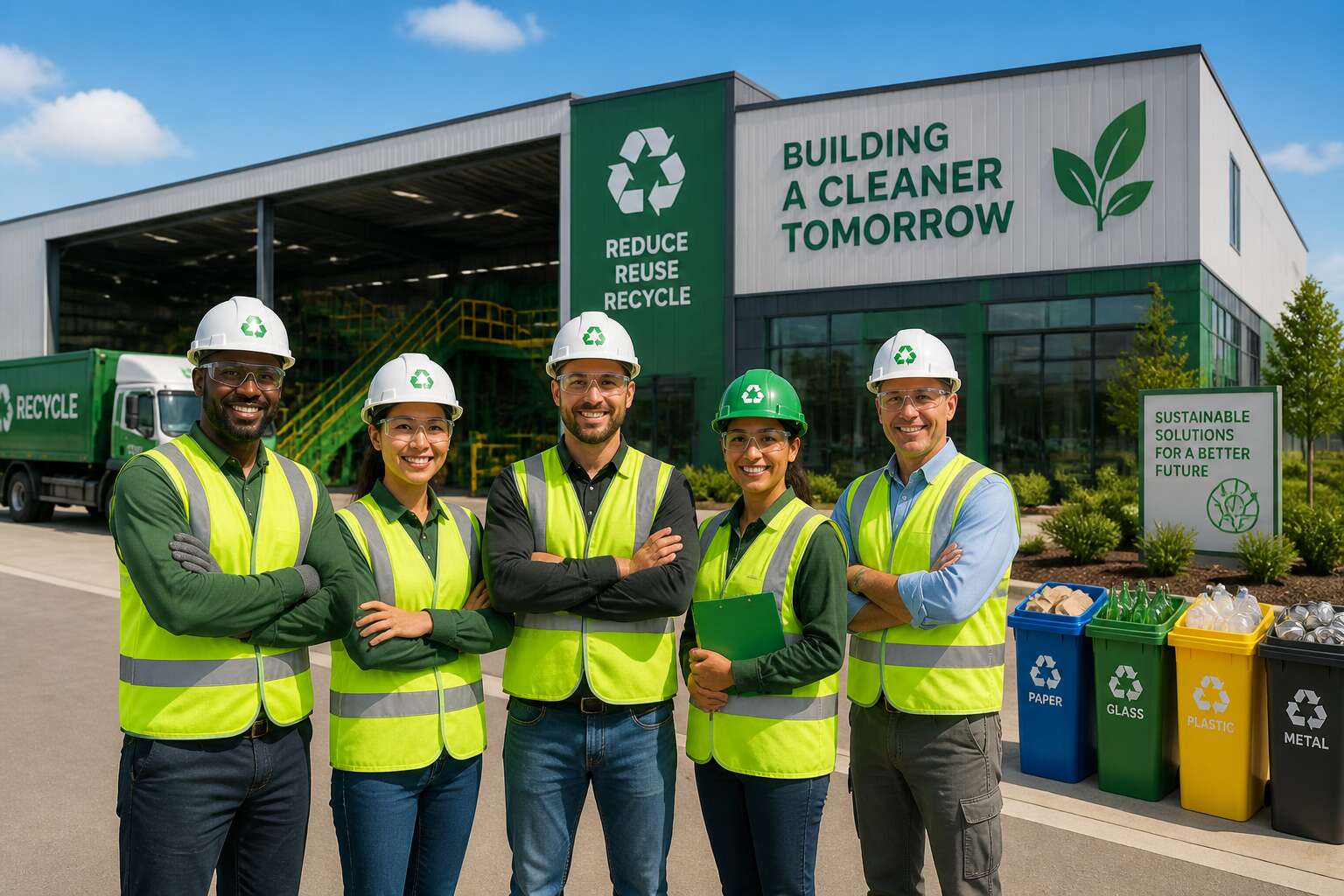
Core Services That Define a Modern Waste Management Group
Commercial and Industrial Collection Programs
South African businesses send millions of tonnes of waste to landfill each year, yet commercial collection is often an afterthought. A modern waste management group approaches this service as a strategic function, one that directly affects uptime and regulatory standing.
Commercial collection relies on scheduled pickups that match each facility’s output. Industrial sites require high-capacity skip bins and compactors serviced by roll-off trucks that handle dense materials like scrap metal or rubble. Each load should be weighed and documented, creating an auditable trail.
Several features define an effective program:
- Flexible scheduling that absorbs seasonal production surges
- Site-specific containment systems for varied waste streams
- Clear reporting on volumes, weights, and diversion rates
These details matter because no two operations produce the same waste. A retail centre in Gauteng generates cardboard and plastic film, while a KwaZulu-Natal factory may deal with chemical residues. A competent waste management group designs collection around those realities, keeping sites clean without disrupting production.
Residential and Municipal Contract Solutions
Residential collection is the most visible face of any waste management group. It is also the least forgiving. A missed pickup becomes a neighbourhood complaint within hours. Holiday spikes and seasonal garden waste throw planned schedules into chaos.
Municipal contracts add another layer. From my work with councils across South Africa, the pattern is consistent: they need partners who can handle weekly kerbside collections, street sweeping, and illegal dumping cleanup. The complexity multiplies in informal settlements, where access and safety shape every decision.
Core elements of a successful municipal partnership:
- Integrated routing that cuts fuel spend while expanding coverage
- Bin configurations matched to each suburb’s specific demographics
- Data-driven scheduling that adapts to seasonal fluctuations
For residents, the measure is simple: bins emptied on time, every time. For municipalities, it is visible cleanliness and defensible budgets. A modern waste management group must satisfy both within the same contract.
Comprehensive Recycling and Recovery Streams
Consider this: South Africa sends over 90% of its waste to landfill, a figure that would make any landfill blush. A modern waste management group turns that statistic into a business case for recovery.
Our recycling and recovery streams extend far beyond the blue bin. We separate organics for composting, extract construction waste for aggregate, and convert non-recyclable fractions into refuse-derived fuel. Each stream demands its own logistics, its own processing line, and its own market.
- Glass cullet for bottle-to-bottle loops
- Polymer film for pelletising
- E-waste for precious metal recovery
The revenue from these streams offsets collection costs. For clients, the environmental benefit is a side effect, not the goal.
Specialized Hazardous Waste Handling
Specialized hazardous waste handling is where a professional waste management group earns its keep. South Africa’s regulatory framework demands cradle-to-grave accountability, and a single mislabelled drum can trigger penalties that dwarf compliant disposal costs.
Our teams handle the difficult fractions that evade general collection routes. That includes:
- Chemical solvents with high toxicity
- Biomedical waste from clinics and labs
- Asbestos and lead-contaminated materials
Each stream requires dedicated containment, transport permits, and treatment protocols. We log every gram, provide full chain-of-custody documentation, and ensure incineration, stabilisation, or neutralisation occurs at licensed facilities. This is not a side service; it is a distinct operational discipline with its own liabilities and technical requirements.
Dumpster Rental, Roll-Off, and On-Site Container Services
Construction debris is the most visible waste stream in South Africa. Building projects generate millions of tonnes of it annually, yet most is recoverable. A modern waste management group provides the foundation for recovery through dumpster rental, roll-off, and on-site container services.
We position roll-off containers directly where the work happens, from Sandton high-rises to Durban’s industrial yards. We assess material flow, space constraints, and project timelines to match the right container volume and design.
- Open-top roll-offs for bulky construction rubble and demolition waste
- Enclosed containers for sites needing security and odour control
- Multi-bin systems that separate recoverable materials at the source
The operational schedule matters as much as the hardware. Scheduled swaps and predictable pickups keep projects moving. When a site manager needs a 6 cubic metre bin replaced by a 12 cubic metre unit mid-project, we respond. That flexibility distinguishes a waste management group!
Waste-to-Energy and Alternative Fuel Programs
The average South African generates over 900 kilograms of waste each year, and a staggering portion of that ends up buried in landfills. That is not an inevitable outcome. A serious waste management group treats residual material as a resource, not a dead end. When all recoverable streams have been stripped out, what remains still holds energy value.
Modern facilities convert non-recyclable materials into energy and fuel. This shifts the focus from disposal to extraction. Organic fractions and specific plastics, those with high calorific value, feed into engineered processes. The result is power for the grid or solid recovered fuel for industries that need high heat output.
We run a pre-sorting protocol before anything goes to the conversion line. This is a controlled, deliberate process.
– We reject hazardous materials that cannot be safely processed.
– We inspect for recoverable metals that slip through manual sorting.
– We verify moisture content to maintain combustion efficiency.
Thermal treatment reduces the volume of residual waste by up to 90%. That statistic matters when every square metre of landfill airspace is under pressure. It also cuts methane emissions, which are far more damaging than carbon dioxide over a short time frame. Large industrial clients like cement kilns and power plants use our refuse-derived fuel to replace coal. This lowers their costs and their carbon footprint, a powerful combination.
A waste management group that offers this service gives businesses a distinct edge. It stops the rotation of waste trucks heading to a dump site. It transforms a cost centre into a measurable environmental contribution through energy security and clean fuel production. That is the core value of a modern operation.
Sustainability Initiatives and Environmental Stewardship
Carbon Footprint Reduction Through Route Optimization
Route optimization directly lowers carbon emissions. For any waste management group, the difference between an inefficient route and a planned one appears as tonnes of avoided CO2 each month.
Our system analyses collection zones, traffic patterns, and load weights. It maps each vehicle’s path to shorten distance and time. Fuel use decreases. Air quality improves. The daily operation becomes more precise.
- Live GPS tracking that adjusts to accidents
- Predictive scheduling for peak demand periods
- Integration with on-board weighing systems
This reduces the carbon footprint per stop by up to 18%. Across South Africa’s expanding suburbs, that is a meaningful change. Efficiency is a form of environmental responsibility.
Circular Economy Strategies and Material Reuse
South Africa’s remaining landfill airspace is measured in years, not decades. A waste management group that focuses only on collection and burial is ignoring the economic value buried in its own trucks. Circular economy strategies ask a simple question: what else can this material become?
Material reuse requires honest sorting, rigorous partnerships, and a stubborn refusal to treat “away” as a destination. Sustainability initiatives in this field often include:
- Converting glass cullet into road-building aggregate
- Turning organic waste into compost for Cape vineyards
- Matching industrial plastic film with packaging manufacturers
Environmental stewardship starts with recognizing that one factory’s byproduct is another’s raw input. The most sustainable tonne is the one that never becomes waste.
Regulatory Compliance, Permits, and Reporting Standards
South Africa’s waste sector operates under one of the most exacting regulatory regimes on the continent. The National Environmental Management: Waste Act requires every waste management group to hold a suite of permits, from storage licenses to transport authorisations. Compliance is not a back-office chore; it is the bedrock of operational legitimacy.
Reporting standards demand granular data. Tonnages, waste streams, disposal methods, and the carbon intensity of logistics must be documented and submitted to provincial authorities. For a waste management group, the annual environmental report includes:
- Waste classification and quantification per site
- Proof of permitted disposal facility usage
- Emissions and leachate monitoring results
These requirements force transparency into every link of the chain. Environmental stewardship means treating regulators as partners rather than adversaries. It means auditing internal processes before an inspector does, and maintaining meticulous records that stand up to scrutiny. In this light, compliance becomes a competitive advantage, not a constraint.
Zero-Waste-to-Landfill Certification Pathways
Zero-waste-to-landfill certification is not a badge you purchase. It is a gauntlet of audits, mass balance calculations, and unannounced inspections. A waste management group earns this designation by proving that at least ninety percent of every stream finds a second life.
The certification pathway follows a demanding sequence:
- Detailed baseline waste characterisation
- Implementation of recovery infrastructure
- Twelve months of verified diversion data
- Independent site inspection and documentation review
We find this process clarifying. The discipline required to track residual material changes how a company thinks about stewardship. You begin noticing what others discard without thought.
Selecting the Right Waste Management Group for Your Business
Evaluating Scope of Services and Geographic Coverage
Choosing a waste management group for your business rarely comes down to price alone. In South Africa, the difference between a reliable partner and a costly mistake often sits in the details of geographic reach and service scope. A national footprint on paper means little if their trucks cannot service your site efficiently.
When you evaluate potential partners, examine their logistics network closely. Ask whether they can cover every location on your operational map, including future expansion sites. A group that spreads resources too thin across provinces will show cracks in collection schedules and response times.
- Verify response times for collection across each of your sites.
- Check whether their depot network aligns with your geographic footprint.
- Ask how they manage coverage gaps during seasonal demand spikes.
Ultimately, the right waste management group matches your operational reality, not their marketing material. Confirm their claims with site visits and references from businesses in your sector. That diligence keeps your waste programme stable and your operations running smoothly.
Verifying Certifications, Insurance, and Safety Records
A single overlooked insurance clause can unravel an entire waste programme. Before signing with any provider, demand original certificates and safety files from the waste management group you are vetting. In South Africa, the Department of Employment and Labour audits these records, but your own review matters more.
Request proof of valid COIDA registration, environmental permits, and public liability cover. Each document tells a story about operational integrity.
- Expiry dates on every certificate reveal upkeep discipline.
- The insured entity on the policy must match the contracting party.
- Incident reports from the past three years show response quality.
An honest group will share these without hesitation. Weak records often hide behind generic safety promises and operational defaults. Verification rests with you.
Understanding Transparent Pricing and Contract Flexibility
Pricing clarity is the first test of any waste management group. When a contract hides fuel levies or sorting fees, your budget pays for guesswork. A reputable partner in South Africa itemizes every line, from collection frequency to landfill charges. Flexibility matters equally. Business cycles shift, seasons change, and a rigid agreement becomes a liability. I always request quarterly reviews that allow volume adjustments without penalties.
A transparent contract should include the following details:
- fixed base rates
- indexed adjustments linked to published tariffs
- termination windows
- dispute resolution process
These elements define a dependable partnership. A provider that answers pricing questions directly remains the rare exception.
Customer Support, Reporting Dashboards, and Accountability
Most waste management groups disappear after the contract is signed. The rare provider stays visible, and that visibility is essential. I have sat through quarterly reviews where the presenter showed one smooth chart and called it success. When I asked for the underlying data, the room went quiet. Silence is not a reporting metric.
A solid reporting dashboard should show collections, diversion rates, route exceptions, and missed pickups in near real time. You should never have to email three people to learn why a bin was skipped. The support team should already know, and they should tell you before you ask!
- Who answers when you call?
- Can they see the same dashboard you see?
- Do they follow up in writing?
Those three questions expose the difference between a vendor and a partner. Choose the waste management group that answers with data and follows up with action.
Technology and Data-Driven Innovation in Waste Operations
Smart Bins, IoT Sensors, and Real-Time Fill Monitoring
A quarter of collection vehicles in Gauteng make trips to bins below 30% capacity, burning fuel on emptiness. A forward thinking waste management group avoids this by deploying smart bins with IoT sensors that transmit fill levels every hour. Ultrasonic devices inside each container measure depth, while real time fill monitoring feeds a central operations dashboard, turning static routes into live decisions. Field crews receive alerts only when thresholds are met, slashing unnecessary stops. The data reveals patterns across suburbs and industrial parks, exposing waste generation rhythms no manual audit could capture. This approach reallocates driver hours toward genuine need.
- Predictive maintenance for sensor battery failures
- Automated rerouting when unexpected spikes occur
- Comparative analytics between collection zones
For South African municipalities, replacing guesswork with granular visibility lifts operational efficiency without expanding fleet size, a quiet shift from routine to reason.
AI-Enhanced Sorting and Contamination Reduction
A single shredded receipt or stray bottle cap can downgrade an entire batch of recyclable plastic. In a modern waste management group, AI enhanced sorting units now detect those contaminants in real time. Computer vision and near infrared spectroscopy work together, scanning every item on the conveyor and firing reject valves within 50 milliseconds.
The effect on contamination reduction is measurable. One contaminated load can raise reprocessing costs by 40%, which is why these systems track moisture, polymer density, and even print on packaging.
- Optical sorters distinguish between PET, HDPE, and film layers
- Moisture sensors flag wet paper that can ruin fiber quality
- Deep learning models adapt to new packaging types each season
For a waste management group, this means cleaner output and higher resale value. It shifts sorting from guesswork to a disciplined, data driven process.
Fleet Telematics and Predictive Maintenance Logistics
Fleet telematics is reshaping how a waste management group watches its trucks. GPS sensors record every stop, route deviation, and idle minute. This data feeds into predictive maintenance models that flag a failing brake pad or hydraulic leak before it strands a driver on a Joburg highway. The result is fewer breakdowns and more predictable collection cycles.
For logistics, telematics reveals patterns. A route that looks optimal on paper might have a bottleneck at a school crossing during peak hours. Real time traffic feeds adjust dispatch instantly.
- Engine diagnostics trigger service alerts, not calendar reminders.
- Fuel consumption data pinpoints inefficient routes.
- Driver behaviour metrics reduce harsh braking and idling.
These systems cut downtime and keep bins emptied on schedule. Mastering this data removes guesswork and adds precision.
Waste Analytics Dashboards and Diversion Rate Tracking
Mining weighbridge data exposes the raw truth of recycling efforts. A waste management group can no longer claim progress without proof. Analytics dashboards now map every material stream, from glass to organic waste, against the volumes sent to landfill. This visibility turns diversion rate tracking from a quarterly estimate into a live number.
- Recovery percentages per client contract
- Contamination rates from optical sorters
- Composition trends by source sector
These metrics surface hidden inefficiencies. A contract promising 65% diversion might drop to 42% when matched against actual truck weights. The dashboard flags that discrepancy within days, not at the annual audit. For South African municipalities and industrial clients, this detail changes procurement. It also builds trust with regulators who demand accurate reporting. A waste management group that watches this data closely outs performance claims to reality.
Industry-Specific Waste Solutions and Custom Partnerships
Healthcare and Medical Waste Disposal Best Practices
Healthcare facilities generate a complex mix of infectious, sharps, and pharmaceutical waste. A responsive waste management group understands that each ward produces distinct streams, so a one-size-fits-all approach fails. Custom partnerships begin with a comprehensive audit of clinical workflows, from theatre to outpatient clinics. The waste management group then designs a collection schedule that respects infection control protocols while minimising disruption. Best practices include rigorous segregation at the point of generation, using colour-coded containers, and staff training that reduces cross-contamination. For example, a simple list of daily actions:
- Segregate sharps immediately after use
- Keep pharmaceutical waste separate from general waste
- Label all containers with the originating department
These steps, when reinforced through regular audits, lower the risk of needle-stick injuries and ensure compliance with the National Health Act. A true partnership provides transparent reporting so hospitals can track their waste diversion progress.
Construction and Demolition Debris Management
Construction sites in South Africa generate a particular kind of chaos. Concrete, steel, timber, and gypsum pile up in mixed skips. A waste management group that treats this debris as a single problem is missing the point.
A custom partnership starts with mapping the demolition sequence and build phases. The group can then deploy separate containers for inert fill, recyclable metal, and hazardous asbestos, still found in older Johannesburg buildings. This is not about convenience. It is about understanding what each pile contains and where it can go.
Consider a typical inner-city renovation:
- Crushed concrete becomes road base
- Recovered steel returns to the smelter
- Clean timber is chipped for biomass fuel
That kind of segregation only happens when the waste management group and the site manager share a clear plan. It changes the economics of a project. It also changes what gets buried in a landfill.
Retail, Hospitality, and Food Service Diversion Programs
In South Africa, food and beverage outlets discard an estimated 10 million tonnes of edible product each year. That figure represents lost revenue, not simply waste. A retail floor and a hotel kitchen produce fundamentally different streams. Glass, cardboard, and organic offcuts require separate routing and different recovery partners. A capable waste management group maps each outlet’s procurement cycles and peak service periods before placing a single skip.
- Pre-consumer kitchen trimmings go to pig farmers or composting facilities
- Post-consumer plate waste enters a dewatering unit before anaerobic digestion
- Waxed cardboard is baled and sent to a dedicated paper mill
This segmentation demands that the venue’s head chef and the group’s account manager agree on contamination thresholds. When food waste is diverted, the landfill receives almost nothing from the back of house.
Manufacturing and Industrial Byproduct Streams
A single automotive plant generates more steel swarf in a week than a small town discards in a year. That metal scrap, along with plastic trim, chemical residues, and spent coolants, demands separate handling. A waste management group builds custom partnerships around each production line, not generic bins. We map your shift patterns and maintenance cycles to schedule pickups that never disrupt output.
Typical industrial byproduct streams include:
- Ferrous and non-ferrous metal turnings
- Polymer pellets and off-spec batch material
- Solvent-laden rags and filter media
Each stream gets its own recovery route. Metal goes to smelters, polymers back to extrusion, solvents to fuel blenders. Our team tracks contamination at the source, so your line operators don’t guess. This is how manufacturing waste becomes a measured resource.
Event Waste Management and Temporary Service Structures
One weekend music festival can produce more waste than a small restaurant does in a year. That waste appears in crowded aisles, back-of-house staging areas, and vendor stalls. A waste management group must design a temporary infrastructure that adapts to pedestrian patterns and event timelines. Custom partnerships for events begin with mapping foot traffic, food vendor locations, and peak consumption hours.
Temporary service structures include mobile compactors, color-coded collection units, and escorted hauling schedules. For industrial clients, the same logic applies, but with different rhythms. A custom partnership might align bin placement with shift changes or maintenance windows, ensuring that waste never sits longer than needed.
- Mobile recycling stations for high-traffic zones
- Temporary storage units for back-of-house waste
- Dedicated service routes for multi-day events
Every site has its own logic. The waste management group works with that logic, whether the challenge is a stadium crowd or a factory floor.


0 Comments